 |
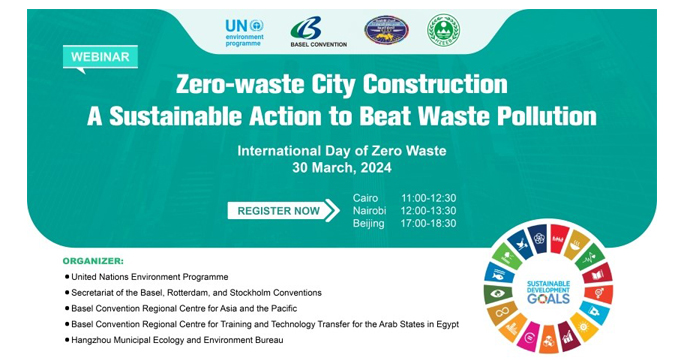
City representatives from Australia, Brazil, China, Lebanon and New Zealand showcase practices of zero-waste initiatives in different regions, including on involvement of communities and the youth to separate e-waste from household waste and increase its recycling, in cooperation with PACE II (The Partnership for Action on Challenges Relating to E-waste).
Zero-waste Cities Construction: A sustainable Action to Beat Waste Pollution
The session will explore how city planning, communities, academia and the youth can contribute to Zero-waste strategies in cities.
Zero-waste is a long-term goal to prevent and avoid the generation of waste, by implementing waste generation prevention and minimization strategies.
The webinar will describe how these strategies, to be successful, require the involvement of different stakeholders in cities.
The Partnership for Action on Challenges relating to E-waste (PACE II) contributed to this project, supporting community action to separate e-waste from household waste as well as awareness raising of e-waste in universities and schools, in China.
To register, click here.
|
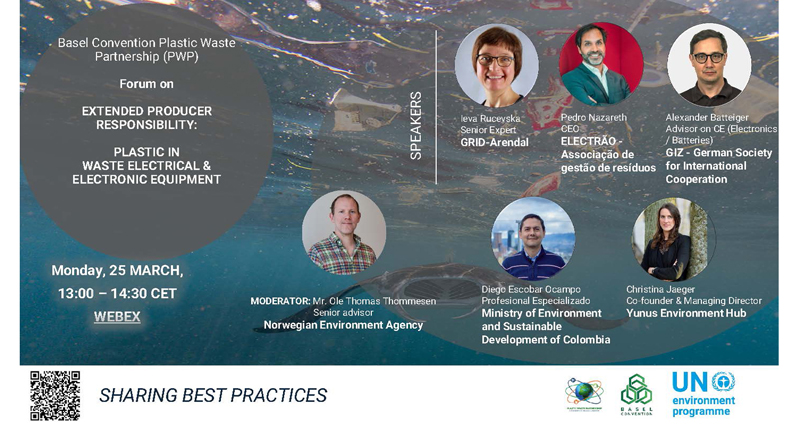 |
Registration is open to the upcoming session of the Basel Convention Plastic Waste Partnership (PWP) Forum on Extended Producer Responsibility: Spotlight on e-waste. The webinar will take place on 25 March 2024.
Basel Convention Plastic Waste Partnership (PWP) Forum on extended producer responsibility: plastic in waste electrical & electronic equipment
|
 |
Registration is open to the upcoming webinar on “Sound management of waste containing nanomaterials” organized by the BRS Secretariat and UNITAR. The webinar will take place on 26 March 2024 at 13:00 CET.
Sound management of Waste Containing Nanomaterials
|
 |
Questionnaires have been sent to Parties, to assess their technical assistance needs, as well as abilities to offer technical assistance.
Calling all Parties to respond the BRS Secretariat with their technical assistance needs by 31 May 2024
|
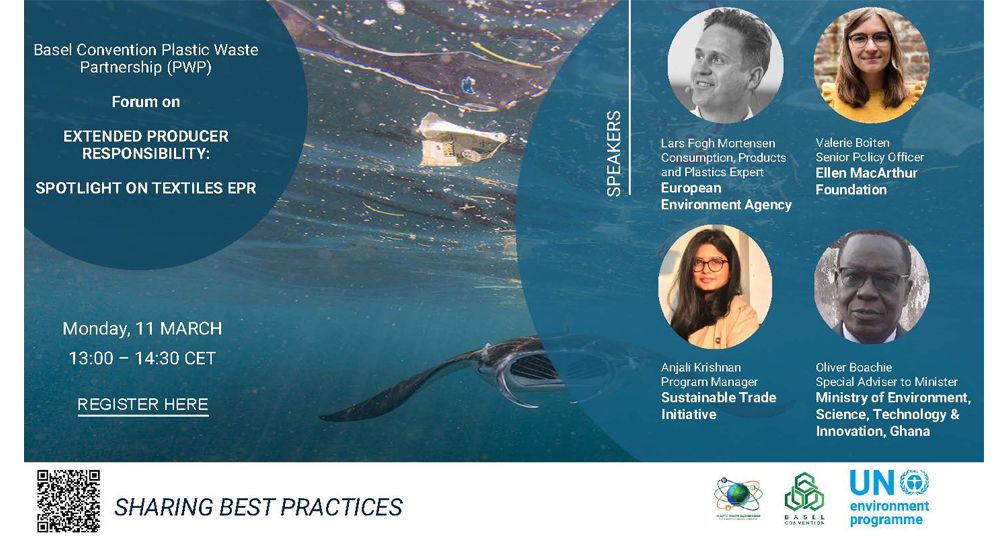 |
Registration is open to the upcoming session of the Basel Convention Plastic Waste Partnership (PWP) Forum on Extended Producer Responsibility: Spotlight on textiles EPR. The webinar will take place on 11 March 2024.
Basel Convention Plastic Waste Partnership (PWP) Forum on Extended Producer Responsibility: Spotlight on textiles EPR
|
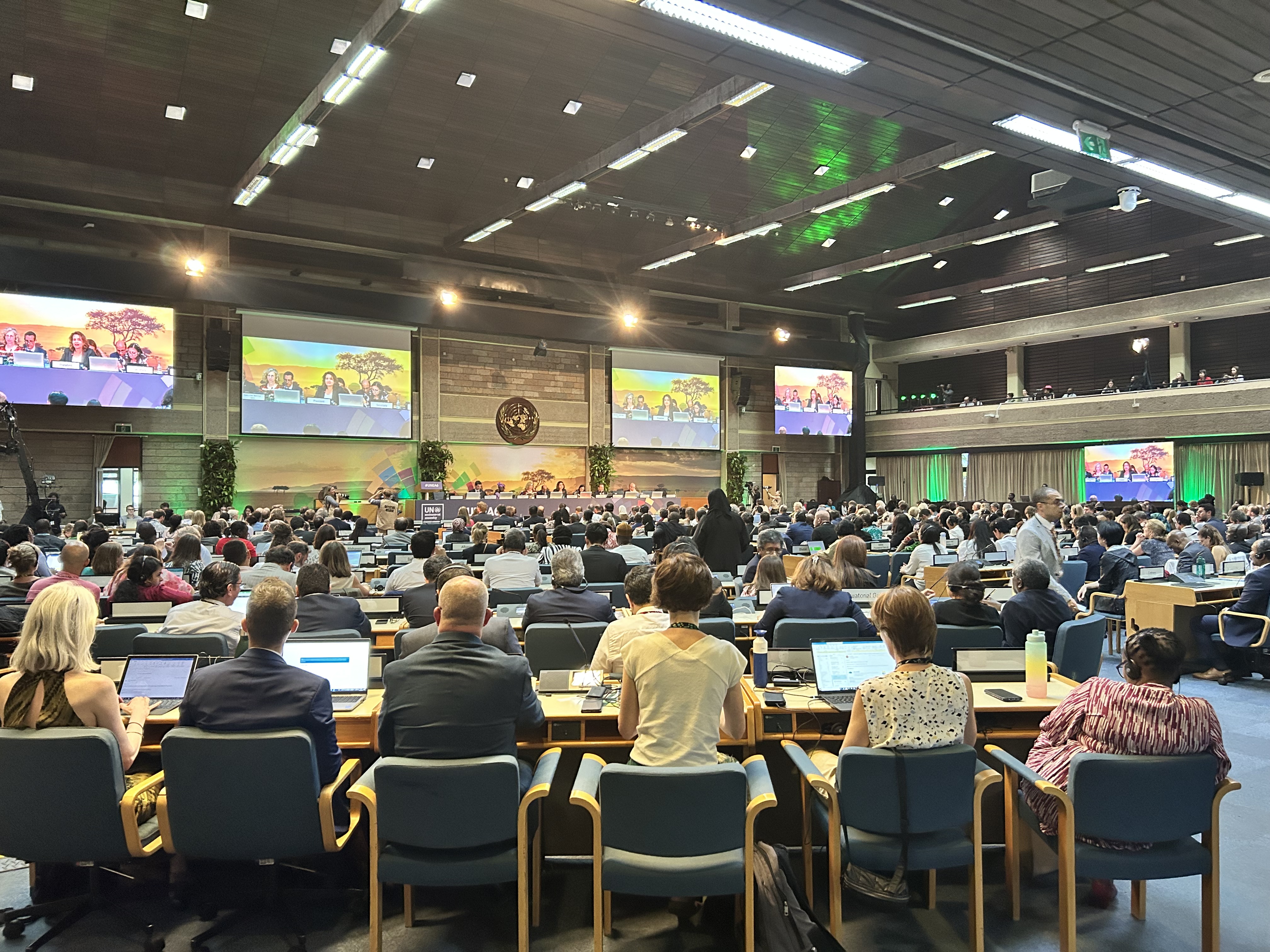 |
The sixth session of the United Nations Environment Assembly (UNEA-6) concluded with adopting 15 resolutions advancing collaboration action on the triple planetary crisis.
Environmental multilateralism celebrated at UNEA-6
|
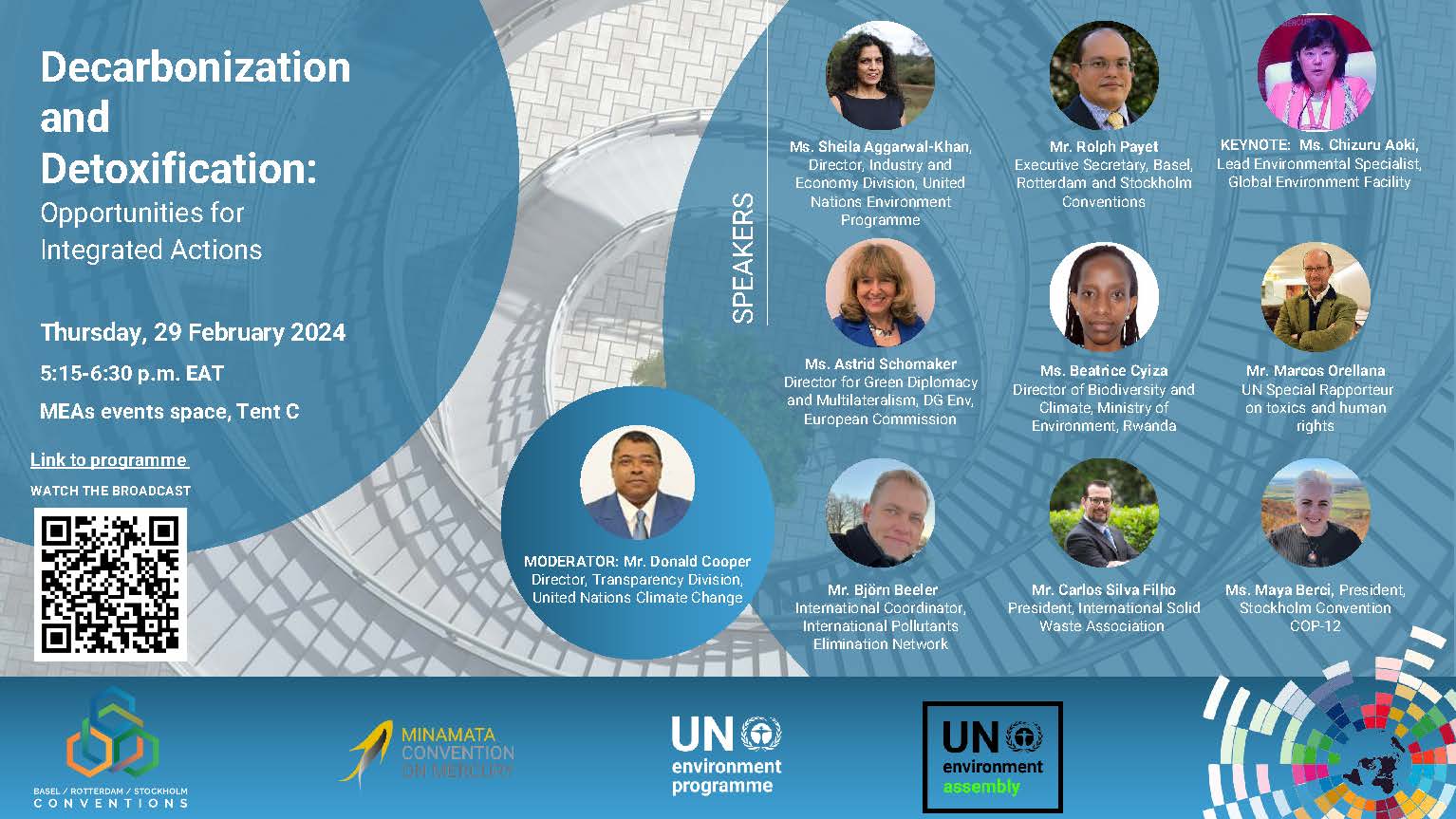 |
Climate change and pollution often have joint sources and exert combined and mutually reinforcing pressures on the environment and human health.
Side event: Decarbonization and Detoxification: Opportunities for Integrated Actions
|
 |
The Secretariat of the Basel, Rotterdam and Stockholm conventions will participate in the upcoming UNEA-6 to show case the contributions of the BRS conventions to tackle the triple planetary crisis and to attain the SDGs, while highlighting ongoing cooperation with UNEP.
BRS Secretariat at UNEA-6
|
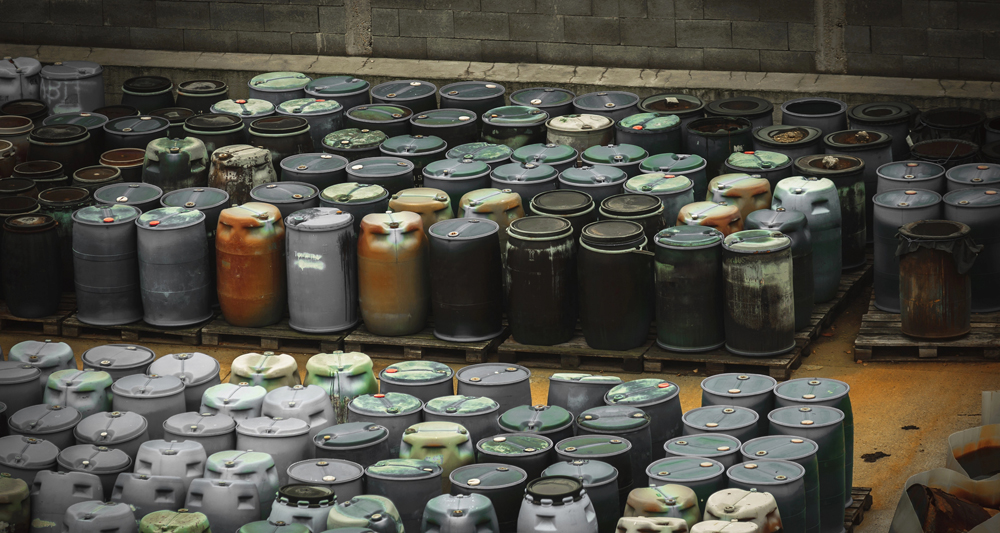 |
In a recent conversation the World Customs Organization (WCO), the BRS Secretariat and others discussed cooperation between environmental and customs authorities to support the enforcement of MEAs.
Strengthening cooperation between environment and customs
As decision-makers are gathering this week at UNEA-6 to discuss how multilateralism can help tackle the triple planetary crisis of climate change, nature and biodiversity loss, and pollution and waste, the conversation about the cooperation between environmental and customs authorities to support the enforcement of MEAs, in particular the Basel Convention to prevent and tackle the problem of illegal traffic of hazardous and other wastes is highly relevant.
This year the 8th annual meeting of Environmental Network for Optimizing Regulatory Compliance on Illegal Traffic or in short ENFORCE was hosted by the World Customs Organization and allowed to hear voices from regions and globally about enforcement and environmental crimes challenges and opportunities. The eighth ENFORCE meeting was held back-to-back with the Green Customs Initiative Annual Partners Meeting and together these discussions fostered cooperation on a range of issues including best practices and actions undertaken to combat illegal traffic, the role of trade facilitation in promoting compliance to MEAs and enforcement issues.
See more in the Press release by WCO.
|
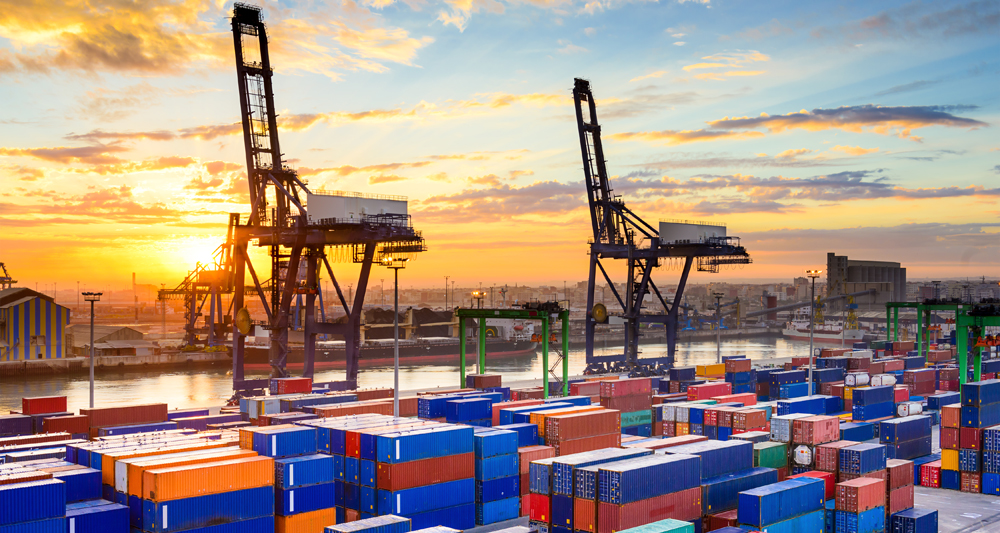 |
Find out about custom codes for chemicals and wastes listed under the three Convention and how they are created.
Understanding of the role of custom codes (Harmonized System Codes) for implementing the Basel, Rotterdam and Stockholm Conventions
|
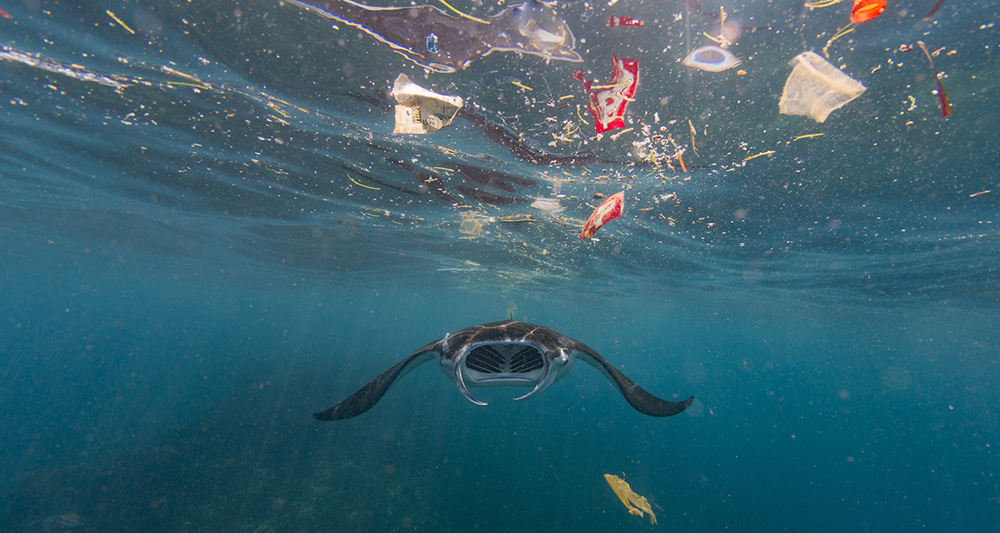 |
The second webinar of the Basel Convention Plastic Waste Partnership (PWP) Forum on Extended Producer Responsibility took place on 26 February 2024. The presentations and recording are available in the website.
Basel Convention Plastic Waste Partnership (PWP) Forum on Extended Producer Responsibility: Plastic Wastes in Packaging
|
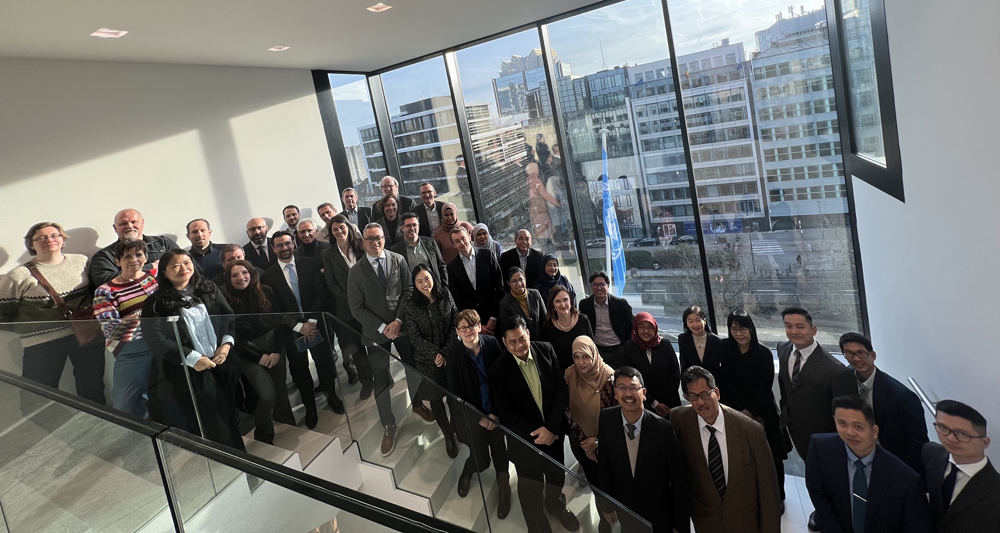 |
The BRS Secretariat supports tackling illegal traffic in hazardous and other waste by providing support to of the Project Unwaste Study Visit that took place in Brussels and Rotterdam from 29 January to 1 February 2024.
Tackling illegal traffic in hazardous waste between Europe and Southeast Asia
The BRS Secretariat supports tackling illegal traffic in hazardous and other waste by providing support to of the Project Unwaste Study Visit 2024, Brussels and Rotterdam, (29 January - 1 February 2024).
The Unwaste project aims to fight trafficking in waste between the EU and Southeast Asia by promoting enhanced EU-ASEAN Member States partnerships, in support of ongoing efforts towards a circular economy transition, in line with the relevant policy frameworks.
The project objectives are:
- To better understand waste flows between Europe and Southeast Asia, with an additional focus on the COVID-19 pandemic’s impact on medical and hazardous waste movements.
- To promote cooperation through national dialogues to combat illicit movements of waste from the EU towards Southeast Asia.
- To facilitate intra- and inter-regional dialogues at the policy level to promote partnership between the EU and Southeast Asian countries, in support of the circular economy approach.
|
 |
The annual meeting of the members of the Environmental Network for Optimizing Regulatory Compliance on Illegal Traffic (ENFORCE) was held on 5-6 February 2024 in Brussels, Belgium. The meeting enhanced and improved international coordination to prevent and combat the illegal traffic of hazardous wastes.
8th Meeting of the Environmental Network for Optimizing Regulatory Compliance on Illegal Traffic (ENFORCE.8)
|
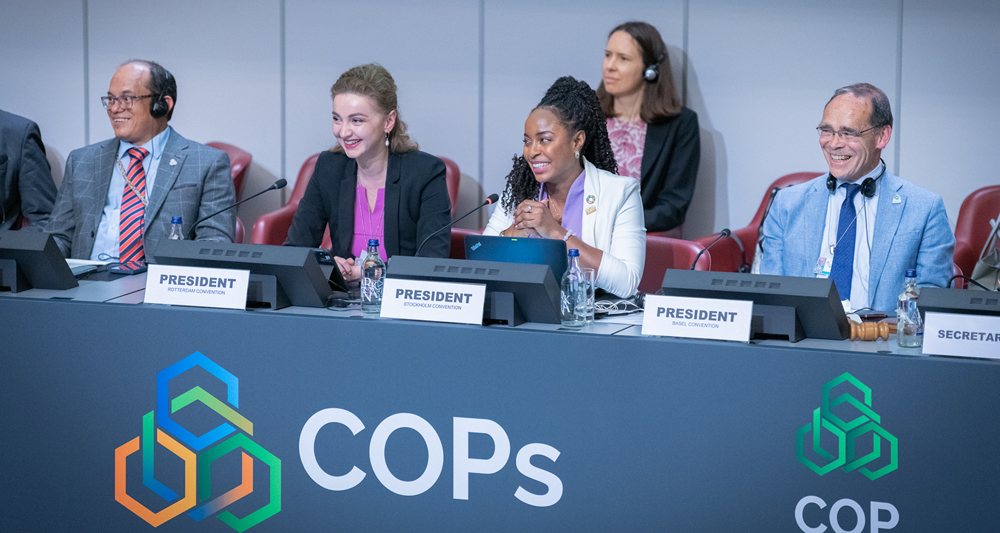 |
The final version of the report of the Basel Convention COP-16 is now available in all 6 UN languages.
COP-16 meeting report in languages now available
|
 |
As we look back on 2023, the BRS Secretariat is proud to share with you some of the key highlights that has made this year a special one!
BRS Secretariat Highlights of 2023
|
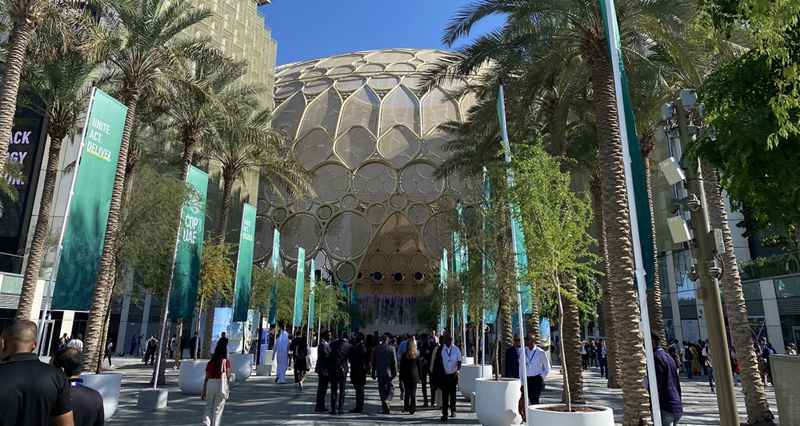 |
The BRS Secretariat engaged in COP28 in various events and shares its takeaways from the meeting on the contribution of the sound management of chemicals and wastes to climate action.
BRS at COP-28: How the sound management of chemicals and waste relates to climate action
|
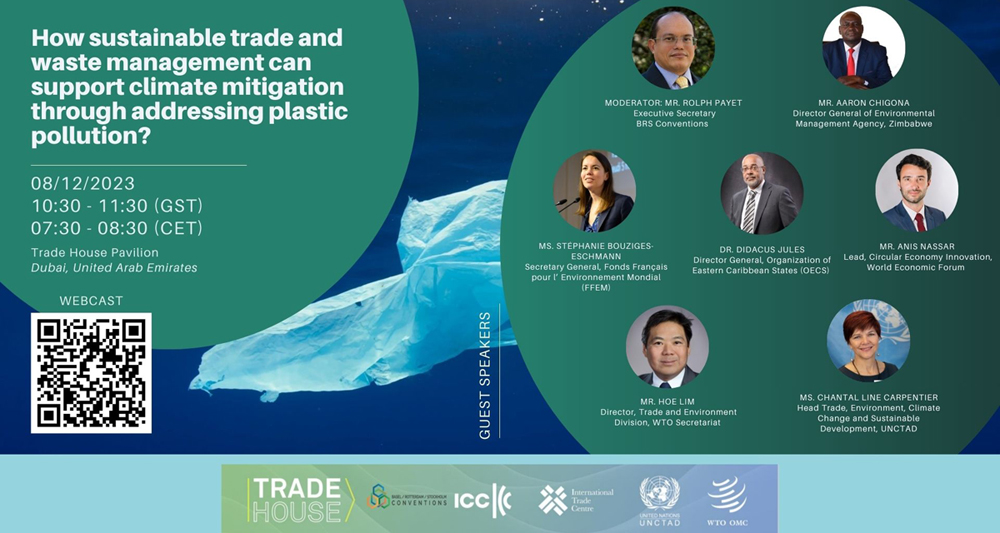 |
Join live and learn more about how responsible trade and environmentally sound management of plastic waste contribute to tackle climate change, promote healthy oceans and protect biodiversity.
How sustainable trade and waste management can support climate mitigation through addressing plastic pollution, 8 December, 10:30-11:30 am (UTC+4)
|
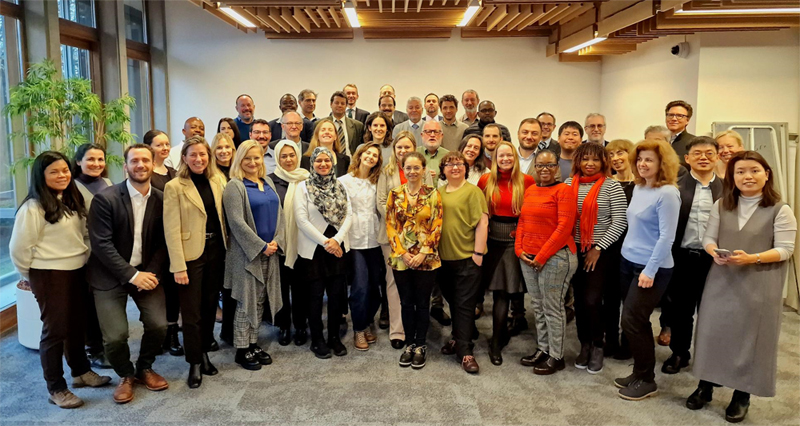 |
Experts are expected to develop revised amendment proposals on Annex IV for the consideration of OEWG-14.
The expert working group on the review of Annexes meets in Geneva for its sixth meeting from 28 November to 1 December 2023
From 28 November to 1 December 2023, more than sixty members and observers of the expert working group on the review of Annexes will meet for the sixth time in Geneva to continue their work on the review of Annexes I, III and IV to the Basel Convention. Since its establishment in 2017, the group has been instrumental in facilitating the adoption by the 2022 meeting of the Conference of the Parties of the landmark e-waste amendments put forward by Ghana and Switzerland. It also paved the way to the proposal by the European Union to amend Annex IV, which was considered for the first time by the 2023 meeting of the Conference of the Parties.
In line with decision BC-16/15 and guided by Co-Chairs Magda Gosk (Poland) and Perine Kasonde (Zambia), the group will continue its work to improve legal clarity under the Convention with the expected development of revised amendment proposals on Annex IV and progress towards the development of revised draft recommendations on the review of Annexes I and III for consideration by the Open-ended Working Group at its fourteenth meeting (25-28 June 2024).
The Secretariat gratefully acknowledges the Governments of Norway, the Norwegian Agency for Development Cooperation and the European Union for their generous financial support to the work of the expert working group.
The meeting page can be accessed here.
|
 |
Complete the online questionnaire and submit the national report for 2022 by 31 December 2023.
Upcoming deadline for Basel Convention national reporting
|
 |
Enhance your chairing skills by taking the free, upgraded training course on Principles of Chairing and Role of the Chairs of BRS Convention Meetings.
Training Course on Basic Principles of Chairing and Role of the Chairs of Meetings of the BRS Conventions
|
 |
Showcasing solutions to challenges encountered by Basel Convention Parties and other stakeholders in implementing EPR schemes and promoting collaboration and knowledge exchange.
Plastic Waste Partnership’s Forum on Extended Producer Responsibility for Plastic Wastes Monday 9 October at 1300 CEST
|
 |
Read the advance English version of the report of the sixteenth meeting of the Conference of the Parties to the Basel Convention.
BC COP-16 meeting report now available
|
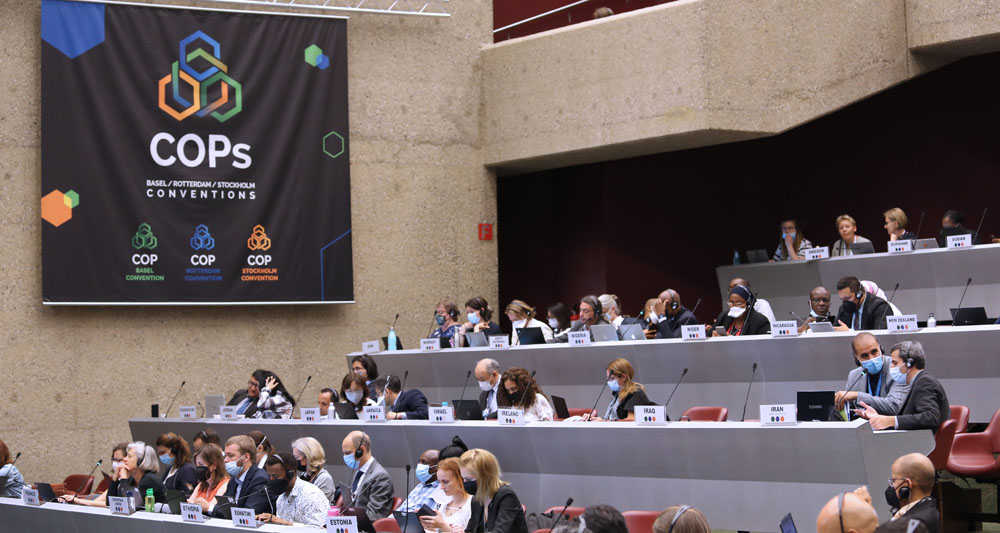 |
The online briefings provided an overview of the outcomes of the latest meetings of the conferences of the Parties to the Basel, Rotterdam and Stockholm conventions. Recordings and presentations are available for download.
Briefing on the outcomes of the face-to-face segment of the COP.16 to the Basel Convention, the COP.11 to the Rotterdam Convention and the COP.11 to the Stockholm Convention
|
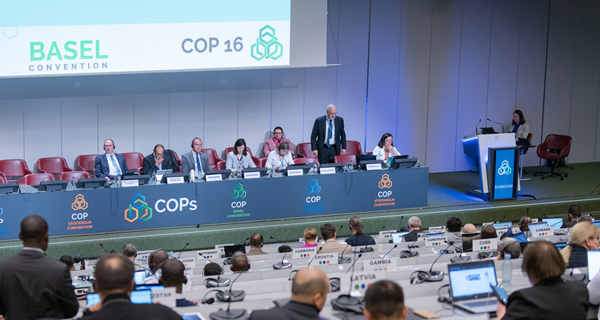 |
Check out the various calls for information and nominations set out in decisions of the sixteenth meeting of the Conference of the Parties of the Basel Convention.
Follow-up to the Basel Convention COP-16 kick-started
|
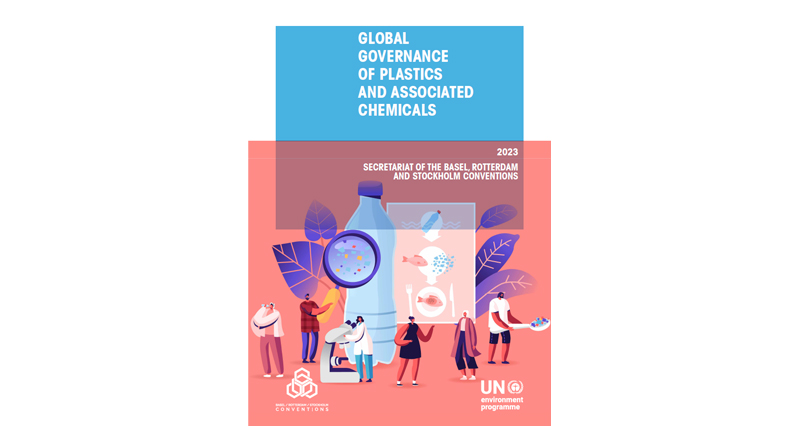 |
The recently launched report on the Global governance of plastics and associated chemicals provides the first comprehensive mapping of the existing global governance landscape for plastics and associated chemicals. The mapping includes both binding and voluntary measures adopted at the global level that explicitly refer to plastics and chemicals known to be found in plastics, as well as those measures that may encompass plastics and associated chemicals by inference.
The global governance of plastics and associated chemicals report is now available
|