All activities

Join us at the Minamata Convention COP-6 Knowledge Lab on Mercury Wastes Management in countries: Latest advances and experience in protecting human health and the environment
The event will provide updates on the work on ESM of mercury wastes under the Basel Convention and present training tools on the coordinated implementation of the Basel and the Minamata conventions regarding mercury waste thresholds under the Minamata Convention.

Join us at the Minamata Convention COP-6 Knowledge Lab on Mercury Wastes Management in countries: Latest advances and experience in protecting human health and the environment

Join us at the Minamata Convention COP-6 Knowledge Lab on Mercury Wastes Management in countries: Latest advances and experience in protecting human health and the environment
 
Introduction to national reporting under the Basel Convention
The objective of this webinar is to provide an introduction to national reporting under the Basel Convention and the electronic reporting system to be used for submitting the national report to the Secretariat. The webinar will also provide information on new questions of the national reporting questionnaires and new features of the ERS. The webinar is primarily intended for newly-designated focal points for the Basel Convention.

Introduction to national reporting under the Basel Convention

Introduction to national reporting under the Basel Convention
 
COP-17 meeting report now available
Read the advance English version of the report of the seventeenth meeting of the Conference of the Parties to the Basel Convention.

COP-17 meeting report now available

COP-17 meeting report now available
 
From Trash to Treasure: Why E-Waste Matters More Than Ever
By 2050, there will be more than an estimated 130 million metric tons of e-waste produced per year, with many products containing Critical Raw Materials (CRMs) - rare elements essential for creating these technologies - and the focus for International E-Waste Day 2025. Today the BRS Conventions Secretariat is also proud to launch an updated Massive Open Online Course (MOOC), on the E-waste challenge, both in English and in Spanish.

From Trash to Treasure: Why E-Waste Matters More Than Ever

From Trash to Treasure: Why E-Waste Matters More Than Ever

14 October 2025

As the global demand for smartphones, electric vehicles, solar panels, and other technologies continues to rise, so does the need for the materials that power them. International E-waste Day this year focuses on Critical Raw Materials (CRMs) – rare elements essential for creating these technologies and often mined in only a few countries. CRMs such as gold, copper, and nickel are vital to modern technologies such as smart phones, but these materials can be recovered from old or broken electronics stored in homes.

It is estimated that by 2050, there will be more than 130 million metric tons of e-waste produced per year, containing precious metals such as gold, copper, and nickel. The level of e-waste far-outstrips current capacities to properly manage it in an environmentally sound manner[1] as outlined in the Basel Convention.

The Secretariat of the Basel, Rotterdam, and Stockholm (BRS) Conventions, together with partners – the European Institute for Innovation and Technology’s RawMaterials Knowledge and Innovation Community (EIT RawMaterials - Academy), the university KU Leuven (KUL) in Belgium, the International Telecommunication Union (ITU), the World Resources Forum (WRF) and the World Health Organization (WHO) – are proud to launch an updated Massive Open Online Course (MOOC), on the E-waste challenge, both in English and in Spanish.

The MOOC includes updated materials and a new course on conformity assessment of e-waste standards and is aimed at students, researchers, policy makers in the environment and telecommunication sectors, practitioners, entrepreneurs, e-waste recyclers and government officials. The MOOC invites participants to become part of the solution to this growing problem. Relevant for developed and developing countries alike, the programme covers all aspects of e-waste with a view to turning the threat of this global explosion of e-waste into an opportunity. The course is organised into five mini courses, which can be completed independently.

Rolph Payet, Executive Secretary of the BRS Conventions, said “E-waste is a growing challenge for our society, and on International E-Waste Day, we join hands to promote solutions, from prevention, recycling and the final disposal, fostering a circular model. The MOOC and live lectures will provide the latest knowledge on critical raw materials recycling from E-waste and the latest research available. The MOOC offers five courses in English and in Spanish that will introduce you to the challenge of e-waste and especially to its environmentally sound recycling. The course will guide you through the issues at stake and will expand on opportunities as well as on possible actions to take at the local, national and regional levels. It will also introduce you to policy tools, standards and best practices for the collection, recycling, and final disposal of e-waste”

“Sound e-waste management is key to our health, environmental sustainability, and recovering valuable raw materials,” said Seizo Onoe, Director of the ITU Telecommunication Standardization Bureau. “The ITU standards covered by this course address the entire lifecycle of digital technologies to help you change the equations that lead to e-waste, handle e-waste sustainably, and create new jobs in recycling.”

World Resources Forum Managing Director, Mathias Schluep, said:

"Education is one of the most powerful tools to address the global e-waste challenge. Through the MOOC, we want to empower students, policymakers, and practitioners to see e-waste not as a burden but as an opportunity for innovation and sustainability. At the World Resources Forum, we were proud to contribute to two courses that build on our longstanding engagement in addressing e-waste challenges. Together, these courses provide learners with both the vision and the practical tools needed to understand the complexity of this waste stream and develop effective solutions."

Notes to editors:

The Basel Convention on the Control of Transboundary Movements of Hazardous Wastes and their Disposal was adopted in 1989 and entered into force in 1992. It is the most comprehensive international environment treaty on hazardous and other wastes and is almost as universal as the United Nations membership, with 191 Parties. With an overarching objective of protecting human health and the environment against the adverse effects of hazardous wastes, its scope covers a wide range of waste subject to transboundary movements: it includes wastes defined as hazardous based on their origin and/or composition and characteristics, as well as four types of waste defined as “other wastes”, namely household waste, residues arising from the incineration of household waste ash, certain plastic waste and certain electronic and electrical waste requiring special consideration.

For more information on E-Waste and the MOOC:

The Secretariat of the Basel, Rotterdam and Stockholm Conventions, please contact asana.greenstreet-tommasino@un.org

International Telecommunication Union, please contact matthew.dalais@itu.int

World Resources Forum, please contact  rebecca.suhner@wrforum.org


[1] Estimates from: Global E-waste Monitor Report 2024 The Global E-waste Monitor 2024 - E-Waste Monitor


E-waste Challenge MOOC live event: Reducing E-waste by design, the role of International Standards for E-waste Management, ITU
Join us in this Webinar to learn more about the advantages of using international standards to manage e-waste. The leading ICT experts at the International Telecommunication Union have been working closely with its diverse memberships to develop international standards (i.e. ITU-T Recommendations) that support the sustainable management of e-waste.

E-waste Challenge MOOC live event: Reducing E-waste by design, the role of International Standards for E-waste Management, ITU

E-waste Challenge MOOC live event: Reducing E-waste by design, the role of International Standards for E-waste Management, ITU
 
E-waste Challenge MOOC live event: Critical materials, e-waste recycling and climate change, KU Leuven
This webinar will open a series of live lectures in the occasion of the third re-launch of the E-waste Challenge Massive Open Online Course (MOOC). This MOOC was initially launched in 2016, the third version was launched on the FutureLearn platform, in September 2025. The E-waste Challenge MOOC includes five courses which can be taken independently or all together.

E-waste Challenge MOOC live event: Critical materials, e-waste recycling and climate change, KU Leuven

E-waste Challenge MOOC live event: Critical materials, e-waste recycling and climate change, KU Leuven
 
E-waste Challenge MOOC live event: E-waste and children health, WHO
Come and learn about children health and exposure to e-waste, celebrate with us International E-waste Day 2025! Primitive recycling techniques such as burning cables for retaining the inherent copper expose both adult and child workers as well as their families to a range of hazardous substances.

E-waste Challenge MOOC live event: E-waste and children health, WHO

E-waste Challenge MOOC live event: E-waste and children health, WHO
 
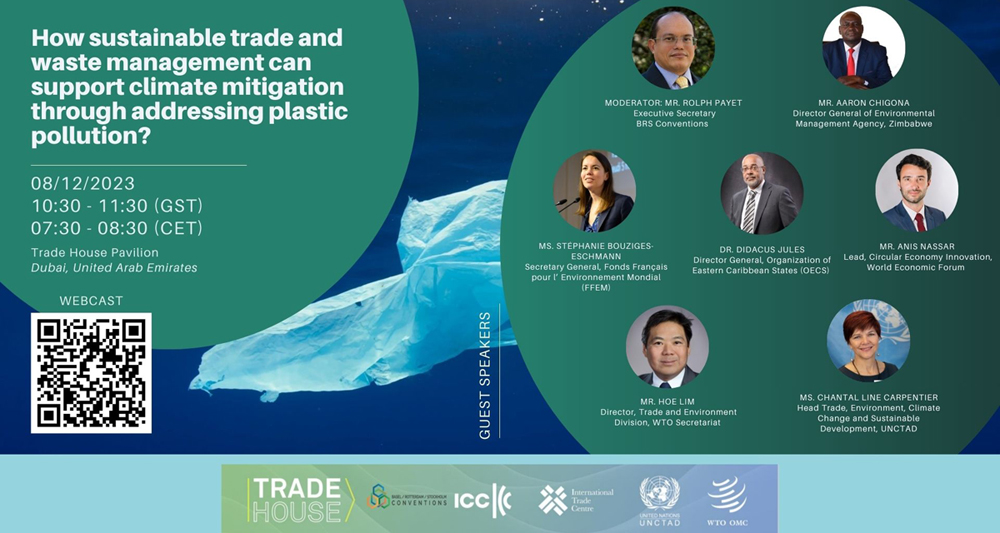
€2 Million Boost: BRS Secretariat and the French Facility for Global Environment Join Forces Against Plastic Pollution
The Secretariat and the FFEM have signed a €2 million financing agreement to tackle plastic pollution in Cabo Verde, Senegal, and French-speaking West Africa.  Read the press release in French here.

€2 Million Boost: BRS Secretariat and the French Facility for Global Environment Join Forces Against Plastic Pollution

€2 Million Boost: BRS Secretariat and the French Facility for Global Environment Join Forces Against Plastic Pollution
 
Outcomes of the COP-17 to the Basel Convention are now available
View the decisions adopted at the COP-17.

Outcomes of the COP-17 to the Basel Convention are now available

Outcomes of the COP-17 to the Basel Convention are now available
 
Press release - Making Visible the Invisible: Strengthened Action on Chemicals and Wastes
Geneva, Switzerland, 9 May 2025 — Governments from 180 countries adopted a series of bold decisions to advance the sound management of chemicals and wastes, protect human health, safeguard the environment and biodiversity and contribute to tackling climate change.

Press release - Making Visible the Invisible: Strengthened Action on Chemicals and Wastes

Press release - Making Visible the Invisible: Strengthened Action on Chemicals and Wastes

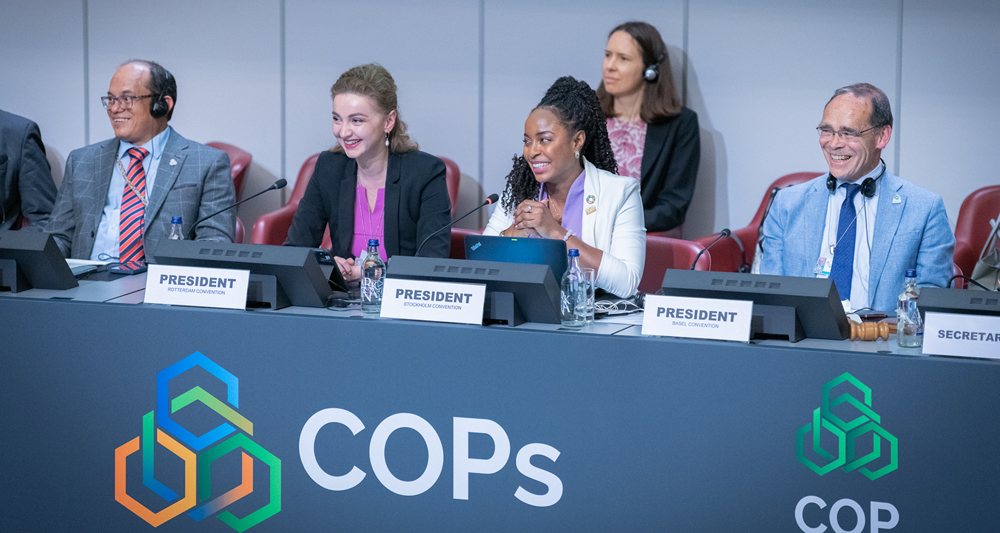
Geneva, Switzerland, 9 May 2025 — After two weeks of intensive negotiations (28 April to 9 May), the 2025 meetings of the Conferences of the Parties (COPs) to the Basel, Rotterdam and Stockholm Conventions concluded today at the Geneva International Conference Centre (CICG). Governments from 180 countries adopted a series of bold decisions to advance the sound management of chemicals and wastes, protect human health, safeguard the environment and biodiversity and contribute to tackling climate change.

These landmark decisions arising from intense multilateral negotiations have a profound impact on how we can address pollution, and its interconnectedness with climate change and biodiversity.” Rolph Payet, Executive Secretary of the Basel, Rotterdam and Stockholm Conventions

High Level Segment: A Call for United Global Action to Tackle Pollution, Advance Circularity and Strengthen Implementation

The High-Level Segment of the 2025 COPs convened ministers from around the world to reinforce their commitment to addressing pollution, climate change and biodiversity loss through multilateral and integrated action. Key messages included strong support for eliminating persistent organic pollutants (POPs), aligning chemicals and waste management with climate and biodiversity goals, strengthening legal frameworks and promoting regulatory tools such as extended producer responsibility. Governments underscored the need for enhanced technical cooperation, digital traceability and innovative financing, including blended finance, to translate global commitments into inclusive national action.

Basel Convention (BC COP-17) Advances Environmentally Sound Waste Management

In a major step forward, Parties adopted an amendment to Annex IV to update definitions of disposal operations - providing enhanced clarity as to what is defined as waste under the Convention with a view to improving its environmental controls.

Delegates also adopted a new strategic framework for the Convention for 2025-2031, along with recommendations to improve the Prior Informed Consent procedure, the cornerstone of the Convention for controlling transboundary movements of waste. In addition, Parties adopted a range of recommendations from the Implementation and Compliance Committee to enhance the support provided to Parties in fulfillment of their obligations under the Convention.

Further actions were decided to improve the environmentally sound management of e-waste and plastic waste, with a focus on strengthening the implementation of the recent amendments to the Convention addressing these challenging waste streams.

A new area of work was launched on used textiles and textile wastes, exploring the impact of such trade and the challenges faced by Parties, with a view to preparing recommendations on possible options offered by the Convention to address these challenges.

The COP also agreed to several technical guidelines on the environmentally sound management of key waste streams, including technical guidelines on UV-328 waste, a persistent chemical used in plastics and by various industries to protect materials from degradation caused by UV radiation. Parties also updated technical guidelines to set more protective threshold values for the destruction of POPs waste. Parties highlighted the need to safely manage used tyres, batteries (including lead-acid batteries and other types) and mercury waste. They agreed to continue developing technical guidelines that set international standards and support countries in creating national laws and strategies needed for effective and sustainable waste management.

Rotterdam Convention (RC COP-12) Strengthens International Trade Governance and Chemical Safety

The Rotterdam Convention (RC COP-12) achieved important progress in strengthening chemical safety in international trade by listing one pesticide and one severely hazardous pesticide formulation in Annex III of the Convention making them subject to the Prior Informed Consent (PIC) procedure and empowering Parties to take informed decisions regarding their future import.

Fenthion is a chemical used in some African countries to control Quelea birds, which can destroy entire fields of grain crops like millet and rice. These birds travel in huge flocks and cause serious damage, especially to small-scale farmers. Fenthion helps protect food supplies but due to its broad-spectrum toxicity and environmental persistence, it can also harm other birds, animals and people if not managed carefully.

Carbosulfan is a pesticide used on crops like rice, cotton and vegetables to kill pests such as insects and tiny worms in the soil. It helps farmers protect their crops and improve yields, but it’s also toxic to humans, wildlife and aquatic life.

Though listing does not constitute a ban, alternatives with a reduced risk are vital to protect human health and the environment, and at the same time help ensure food security.” Christine Fuell, Executive Secretary a.i. of the Rotterdam Convention

Their listing also reinforces the Convention’s role in promoting transparency and safeguarding human health and the environment. In addition, RC COP-12 approved a programme of work for the Convention’s compliance committee and engaged in intensive deliberations on proposals to enhance the Convention’s effectiveness, underscoring commitment to ensuring safer, more transparent trade in hazardous chemicals globally.

Stockholm Convention (SC COP-12) Decisive Action to Eliminate and Restrict POPs

The Stockholm Convention (SC COP-12) advanced global chemical safety by listing medium chain chlorinated paraffins used in polyvinyl chloride (PVC) products, paints and sealants and long-chain perfluoroalkyl carboxylic acids (PFCAs), commonly used in food packaging and firefighting foams. Listing these chemicals in Annex A to the Convention lines them up for elimination.

Chlorpyrifos, a highly toxic pesticide widely used in agriculture for locust and termite control and known to have adverse effects on the nervous system, was also listed. Specific, time-bound exemptions were agreed for the use of UV-328, a chemical commonly used to protect materials from degradation caused by UV radiation, specifically in the aviation industry, supporting the practical phase-out of harmful chemicals.

Parties recognized that over USD 18 billion of funding is needed to support countries in implementing their obligations under the Stockholm Convention during the 2026-2030 period. This submission, along with the 2025 and 2028 PCB elimination targets, will be prioritized for presentation to the Global Environment Facility (GEF) for consideration during its ninth replenishment cycle. The newly operationalized Compliance Committee will provide both targeted and general support to help Parties fulfill their obligations under the Convention.

COPs Reinforce International Cooperation and Support to Advance Chemicals and Waste Management

The Conferences of the Parties (COPs) reaffirmed the vital importance of international cooperation in addressing global challenges related to chemicals and waste. Parties adopted key decisions to enhance implementation through technical assistance and improved access to financing. They also committed to stronger collaboration with other environmental agreements and initiatives, including the Intergovernmental Negotiating Committee on Plastic Pollution (INC), the Global Framework on Chemicals (GFC), the Open-ended Working Group on the Science-Policy Panel on chemicals, waste, and pollution prevention, and multilateral environmental agreements (MEAs) such as the Minamata Convention on Mercury, the UN Framework Convention on Climate Change (UNFCCC), the Convention on Biological Diversity (CBD), and related biodiversity conventions. Governments underscored that sound management of chemicals and waste is essential to achieving the Sustainable Development Goals (SDGs).

Felix Neureuther Named BRS Conventions Advocate for Clean Mountains and Glaciers

The Conferences of the Parties welcomed the appointment of German alpine ski champion and long-standing environmental advocate Felix Neureuther as the BRS Conventions Advocate for Clean Mountains and Glaciers. In this role, Felix will collaborate with the BRS Conventions to promote prevention, support clean-up initiatives and engage youth - helping to amplify the Conventions’ mission to protect human health and the environment from the harmful impacts of hazardous chemicals and waste.

Notes to editors

The Basel Convention on the Control of Transboundary Movements of Hazardous Wastes and their Disposal, adopted in 1989 and entered into force in 1992, is the most comprehensive international environment treaty on hazardous and other wastes and is almost universal, with 191 Parties. With an overarching objective of protecting human health and the environment against the adverse effects of hazardous wastes, its scope covers a wide range of waste subject to transboundary movements defined as hazardous based on their origin and/or composition and characteristics, as well as four types of waste defined as “other wastes”, namely household waste, residues arising from the incineration of household waste ash, certain plastic waste and certain electronic and electrical waste requiring special consideration.

The Rotterdam Convention on the Prior Informed Consent Procedure (PIC) for Certain Hazardous Chemicals and Pesticides in International Trade, adopted in 1998 and entered into force in 2004, is jointly administered by the United Nations Food and Agriculture Organization (FAO) and UN Environment (UNEP). The 167 Parties to this legally binding Convention share responsibility and cooperate to safely manage chemicals in international trade. The Convention does not introduce bans but facilitates the exchange of information among Parties on hazardous chemicals and pesticides, to inform and improve national decision making. In addition, through the PIC Procedure, it provides a legally binding mechanism to support national decision-making on the import and export of certain chemicals and pesticides and disseminates decisions to Parties.

The Stockholm Convention on Persistent Organic Pollutants, adopted in 2001 and entered into force in 2004, is a global treaty requiring its 186 Parties to take measures to eliminate or reduce the release of POPs into the environment, to protect human health and the environment from chemicals that remain intact for long periods, become widely distributed geographically, accumulate in the fatty tissue of humans and wildlife, and have harmful impacts on human health or on the environment.

The Secretariat of the Basel, Rotterdam, and Stockholm Conventions, or BRS Secretariat, supports Parties implement these three leading multilateral environment agreements governing sound chemicals and waste management, according to the mandates in each Convention and as decided by the governing bodies.

For media enquiries, contact:

Maria Cristina Cardenas-Fischer, Head of Unit and Senior Policy and Strategy Advisor, Policy and Strategy Unit, Executive Office, BRS Secretariat, maria-cristina.cardenas@un.org and mea-brs-communications@un.org

Felix Neureuther - Former Alpine Skiing World Champion - Named BRS conventions Advocate for Clean Mountains and Glaciers
Renowned alpine ski legend joins global push to protect mountain ecosystems from plastic and chemical pollution.

Felix Neureuther - Former Alpine Skiing World Champion - Named BRS conventions Advocate for Clean Mountains and Glaciers

Felix Neureuther - Former Alpine Skiing World Champion - Named BRS conventions Advocate for Clean Mountains and Glaciers
 
Watch the Ministerial Interactive Plenary of the High-Level Segment - 1 May at 10:00 - 13:00 CET
We invite you to be a part of the second day of the ministerial interactive discussions where outcomes on the sub-themes pollution, circularity, and implementation will be presented and discussed, available in six languages.

Watch the Ministerial Interactive Plenary of the High-Level Segment - 1 May at 10:00 - 13:00 CET

Watch the Ministerial Interactive Plenary of the High-Level Segment - 1 May at 10:00 - 13:00 CET
 
Watch the Opening Plenary of the High-Level Segment - 30 April at 15:00 - 16:00 CET
Be part of the global conversation on pollution, circularity, and implementation. Watch the Opening Ceremony discussions on YouTube, available in six languages.

Watch the Opening Plenary of the High-Level Segment - 30 April at 15:00 - 16:00 CET

Watch the Opening Plenary of the High-Level Segment - 30 April at 15:00 - 16:00 CET
 
The 2025 BRS COPs Have Officially Begun!
The Conferences of the Parties to the Basel, Rotterdam and Stockholm Conventions are now underway from 28 April to 9 May. Join the global effort to make the invisible visible. Explore our daily video highlights and photo gallery in the BRS COPs 2025 Newsroom.

The 2025 BRS COPs Have Officially Begun!

The 2025 BRS COPs Have Officially Begun!
 
The schedule of side events during the 2025 BRS COPs is now available!
Discover the inspiring topics that will be explored this year to Make Visible the Invisible in the environmentally sound management of chemicals and waste, and join the discussions!

The schedule of side events during the 2025 BRS COPs is now available!

The schedule of side events during the 2025 BRS COPs is now available!
 
Basel Convention COP 17 meeting documents available
All meeting documents for the 2025 BRS COPs are now available in the 6 UN languages.

Basel Convention COP 17 meeting documents available

Basel Convention COP 17 meeting documents available
 
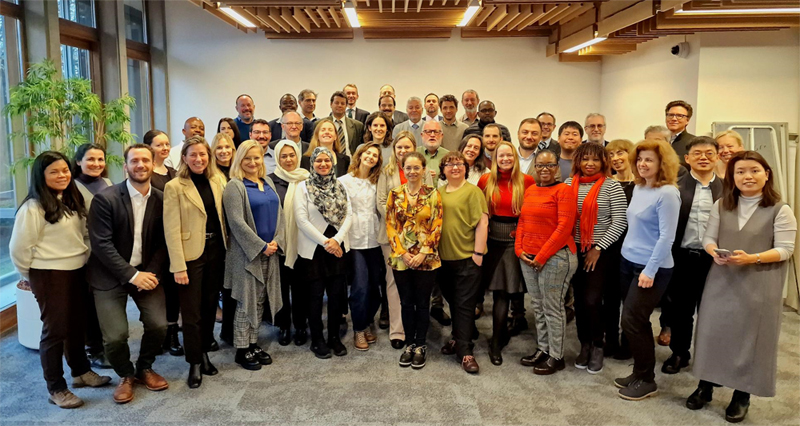
In preparation for the 2025 BRS COPs potential chairs trained!
Two training sessions of potential chairs for meetings of the Basel, Rotterdam and Stockholm conventions were held in Geneva from 3 to 7 February 2025.

In preparation for the 2025 BRS COPs potential chairs trained!

In preparation for the 2025 BRS COPs potential chairs trained!
 
Third call to submit pilot project proposals under the PWP is now open!
The third call to submit proposals for pilot projects under the Plastic Waste Partnership is now open, with a submission deadline of 30 April 2025. Project proposals can receive funding ranging from USD 50,000 to USD 500,000.

Third call to submit pilot project proposals under the PWP is now open!

Third call to submit pilot project proposals under the PWP is now open!
 
Proposed budgets for the biennium 2026-2027 now available
The proposed programmes of work and budgets for the biennium 2026-2027 to be considered by the 2025 BRS COPs are now available.

Proposed budgets for the biennium 2026-2027 now available

Proposed budgets for the biennium 2026-2027 now available
 
E-waste Amendments to the Basel Convention became effective on 1 January 2025
On 1 January 2025 the E-Waste amendments to the Basel Convention became effective, thus making all transboundary movements of e-wastes, whether hazardous or not, subject to the prior informed consent (PIC) procedure.

E-waste Amendments to the Basel Convention became effective on 1 January 2025

E-waste Amendments to the Basel Convention became effective on 1 January 2025
 
Page 1 of 29First   Previous   [1]  2  3  4  5  6  7  8  9  10  Next   Last